
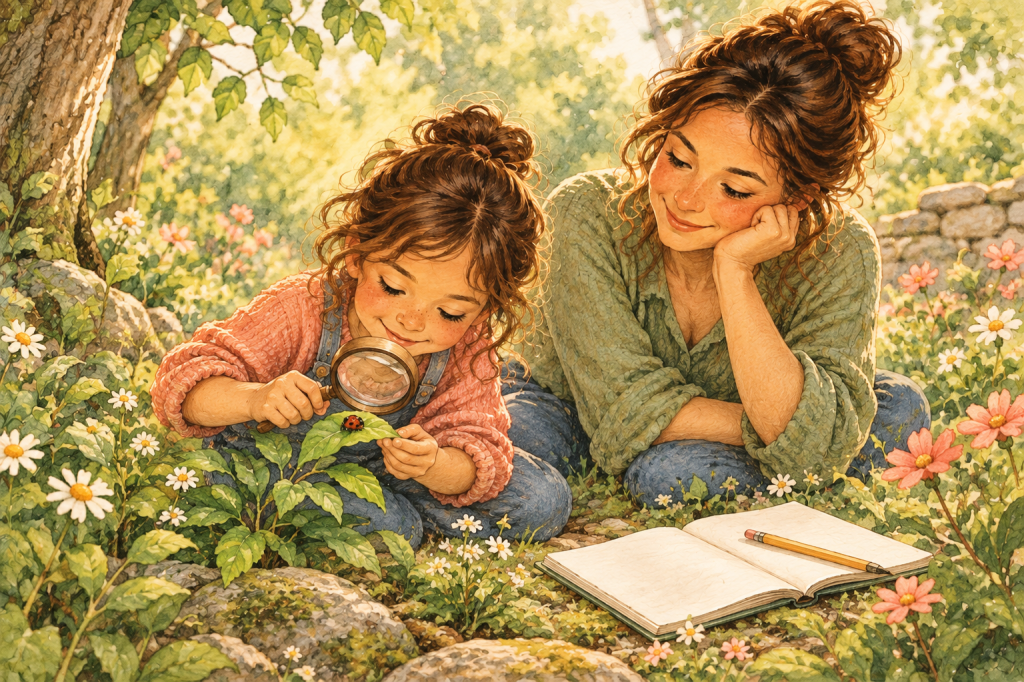
Nature exploration does not require a wilderness trip, expensive equipment, or a carefully planned science lesson. A sidewalk crack, neighborhood tree, garden bed, balcony planter, or patch of sky can give children something real to notice and investigate.
By Paige Turner
The most valuable tool is not a worksheet. It is time to look closely. When children compare leaves, follow an ant, notice changing shadows, or wonder why one bird visits and another does not, they are practicing observation, classification, prediction, measurement, and explanation.
Begin with noticing, not naming
Adults often rush to identify everything: the kind of tree, bird, rock, or insect. Names are useful, but they are not the only learning. Before searching for an answer, ask the child to describe what they see. What colors, shapes, textures, patterns, movements, or sounds stand out? What seems the same? What seems different?
This keeps curiosity open and teaches children that careful observation comes before certainty.
Bring a tiny exploration kit
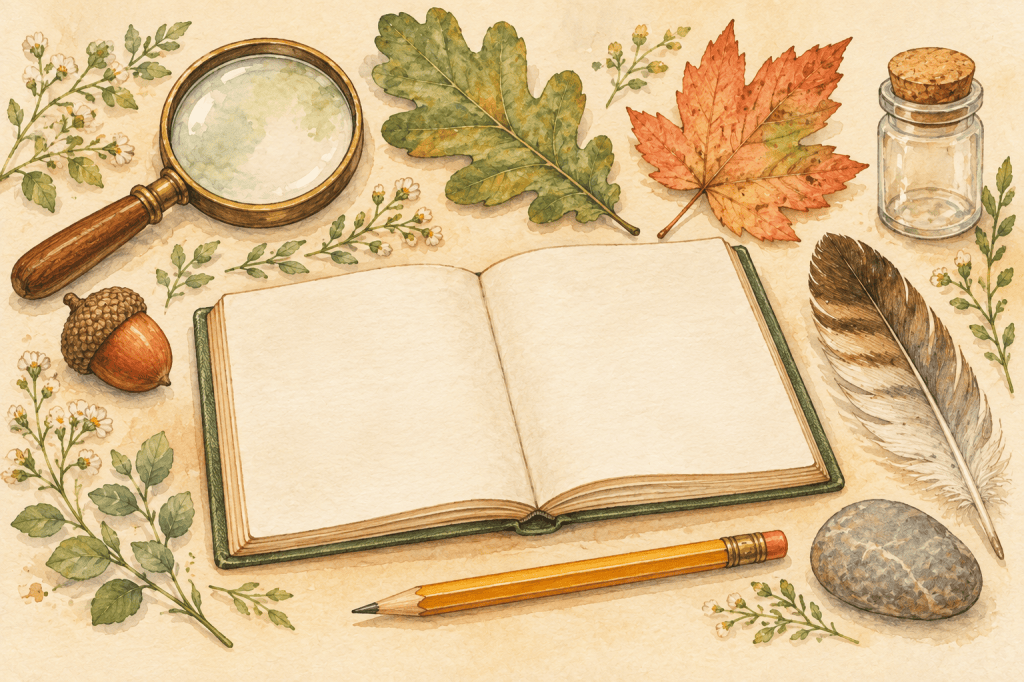
A simple kit might include a blank notebook, pencil, magnifying glass, small ruler, and a reusable container for temporary observation. Add binoculars if you have them, but they are not required. Keep the kit near the door so exploration does not depend on gathering supplies every time.
Try a one-color walk
Choose a color and search for as many natural examples as possible. Compare shades instead of treating every green as the same. Which green is brightest? Which leans toward yellow or blue? Does the color appear on living things, nonliving things, or both?
On another day, hunt for textures, shapes, signs of animals, or evidence of seasonal change. A focused invitation helps children notice details without turning the walk into a race to finish a checklist.
Keep a nature journal that welcomes rough work
A nature journal can hold sketches, questions, measurements, pressed impressions, weather observations, or a few dictated sentences. It does not need to be artistically polished. Drawing an object encourages slower looking because the child must decide where lines, shapes, and details actually belong.
- Sketch one leaf from two angles.
- Record the weather with colors or symbols.
- Draw what an insect did for one minute.
- Compare two rocks using words and pictures.
- Write one question to investigate later.
Observe the same place repeatedly
Returning to one tree, planter, puddle, or patch of ground creates opportunities to notice change. Take a photo or make a quick sketch once a week. Children may spot new buds, fewer insects, changing leaf color, different shadows, or evidence that an animal has visited.
Repeated observation builds understanding that natural systems change over time. It also removes the pressure to find something spectacular every trip.
Let questions lead to small investigations
When a child asks a question, resist answering immediately when it is safe to investigate together. If they wonder which surface warms fastest, place small stones in sun and shade and compare them later. If they wonder what birds eat, observe behavior and consult a reliable field guide. If they notice water disappearing from a shallow dish, mark the level and check again.
Practice respectful exploration
Teach children to leave living creatures where they are, return moved stones carefully, observe nests from a distance, and collect only where collection is permitted. A photograph, rubbing, or sketch can preserve an observation without removing it.
Respect also means accepting a child’s comfort level. Not every child wants to hold a worm or move close to a spider. Curiosity can happen from a safe distance.
Five low-prep nature invitations
- Sit quietly for two minutes and map every sound.
- Find three leaves and sort them in two different ways.
- Watch one small creature without touching it.
- Use a string to measure around a tree trunk.
- Look for evidence of wind, water, or animals.
A gentle place to begin
Choose one small change that fits the child and the season you are in. Try it consistently, notice what helps, and adjust without treating an imperfect day as a failed plan. Small routines become useful when they make real life easier—not when they create another standard everyone has to meet.
Sources & Further Reading
Find Pencil & Pebble
Etsy Store · Coming soon | Teachers Pay Teachers Store · Coming soon | YouTube · Coming soon | Instagram · Coming soon | Pinterest · Coming soon

