
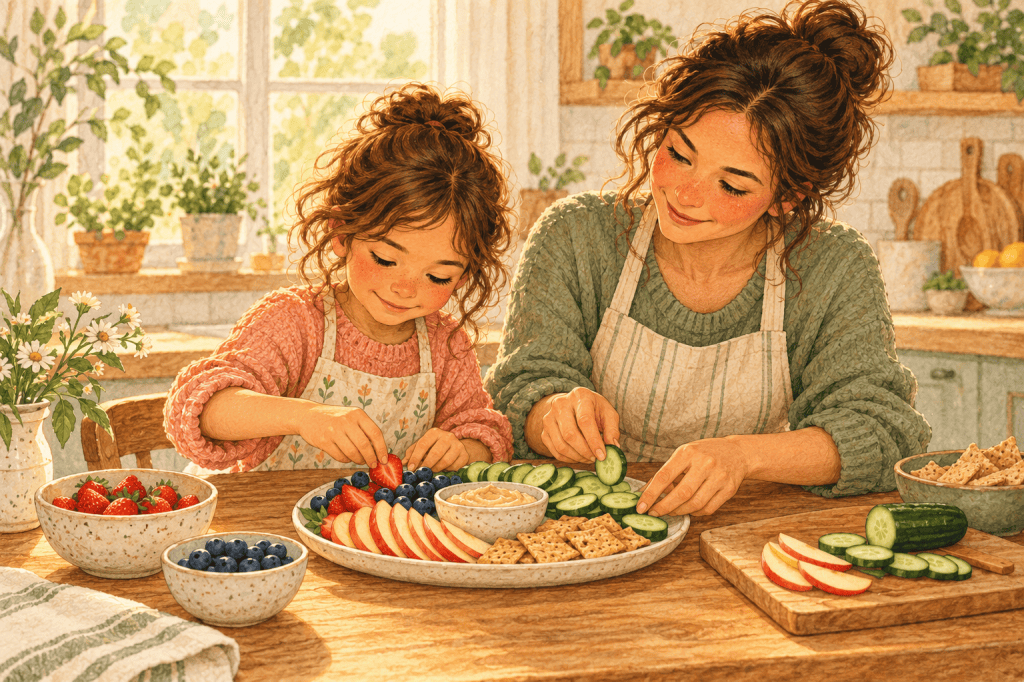
Food can become emotionally loaded very quickly. Adults want children to grow well and eat a varied diet, while children bring their own appetites, sensitivities, preferences, worries, energy levels, and past experiences to the table. The harder everyone pushes, the more a meal can begin to feel like a test.
By Paige Turner
Healthy habits are built across many meals, not decided by one untouched vegetable. A low-pressure approach focuses on predictable opportunities, repeated exposure, participation, and trust. It leaves room for nutrition while recognizing that children are still learning how foods taste, feel, smell, and fit into their bodies.
Think in patterns, not perfect plates
One meal cannot carry an entire week of nutrition. Look at the larger pattern: Are different food groups available over time? Is the child regularly offered familiar foods alongside opportunities to explore? Are meals and snacks reasonably predictable?
This perspective makes it easier to respond calmly when dinner is barely touched or a once-loved food is suddenly rejected.
Offer structure without controlling every bite
Adults can decide what foods are offered, when meals and snacks happen, and where eating takes place. Children can listen to their bodies and decide what and how much to eat from what is available. This division reduces bargaining and lets children practice recognizing hunger and fullness.
Include at least one familiar food when possible. A familiar option does not guarantee the child will eat, but it makes the table feel safer while new or less-preferred foods remain available.
Use neutral food language
Labels such as “good,” “bad,” “junk,” or “healthy food you have to eat first” can create shame or make certain foods feel like prizes. Try descriptive language instead: crunchy, sweet, salty, cool, chewy, juicy, filling, or something our bodies use for energy.
Neutral language does not mean pretending every food has the same nutritional role. It means discussing food without turning eating into a measure of character.
Let exposure count as progress
A child may need many calm encounters before accepting an unfamiliar food. Progress can mean tolerating it on the table, serving it with tongs, smelling it, touching it, licking it, taking a small taste, or eating it in one preparation but not another. Pressure can interrupt that learning by pairing the food with conflict.
Avoid requiring a “clean plate” or an exact number of bites. You can invite exploration—“You may taste it if you want”—without making dessert, approval, or leaving the table depend on compliance.
Invite children into preparation
Participation increases familiarity and gives children meaningful control. Young children can rinse produce, tear lettuce, pour ingredients, stir, arrange foods on a plate, or choose between two vegetables. Older children can read a recipe, measure, cut with appropriate supervision, or plan one part of the meal.
- Choose one fruit for the snack plate.
- Wash berries or snap green beans.
- Arrange foods by color or texture.
- Mix a dip or spread.
- Help write a short grocery list.
Build balanced snacks simply
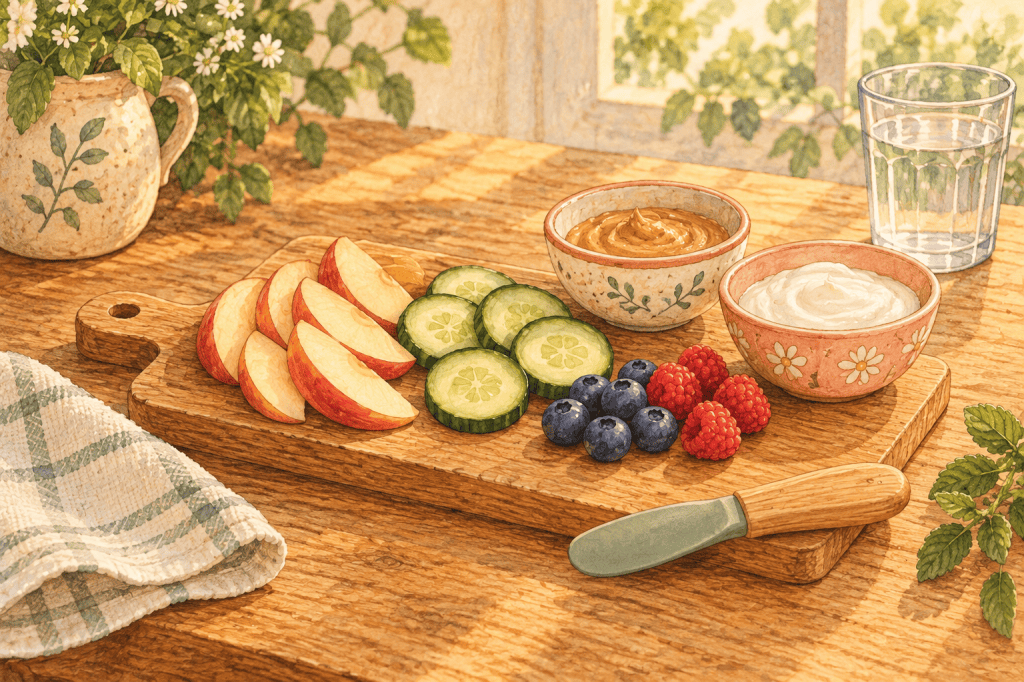
A practical snack often combines two or more components: fruit or vegetables, a protein or dairy food, and a grain or other satisfying carbohydrate. Examples might include apple and nut or seed butter, yogurt and berries, crackers with cheese and cucumber, or hummus with vegetables and pita.
The goal is not a social-media-perfect plate. It is a snack the child can recognize, access, and enjoy.
Respect sensory differences
Texture, temperature, smell, mixed foods, and unpredictable appearance can make eating genuinely difficult. A child may accept a crisp apple but not applesauce, plain pasta but not pasta with visible sauce, or cold carrots but not cooked ones. These distinctions are useful information, not misbehavior.
Serve components separately when that helps. Keep changes small. If eating is extremely limited, stressful, painful, or affecting growth, discuss specific concerns with the child’s pediatrician or an appropriate feeding professional rather than escalating pressure at home.
A calmer mealtime script
- “You do not have to eat it. It can stay on the plate.”
- “Would you like the cucumber on your plate or in a small bowl?”
- “This one is crisp; the cooked one was soft.”
- “You can have more of any food that is still available.”
- “Your body can tell you when it has had enough.”
A gentle place to begin
Choose one small change that fits the child and the season you are in. Try it consistently, notice what helps, and adjust without treating an imperfect day as a failed plan. Small routines become useful when they make real life easier—not when they create another standard everyone has to meet.
Sources & Further Reading
Find Pencil & Pebble
Etsy Store · Coming soon | Teachers Pay Teachers Store · Coming soon | YouTube · Coming soon | Instagram · Coming soon | Pinterest · Coming soon

