
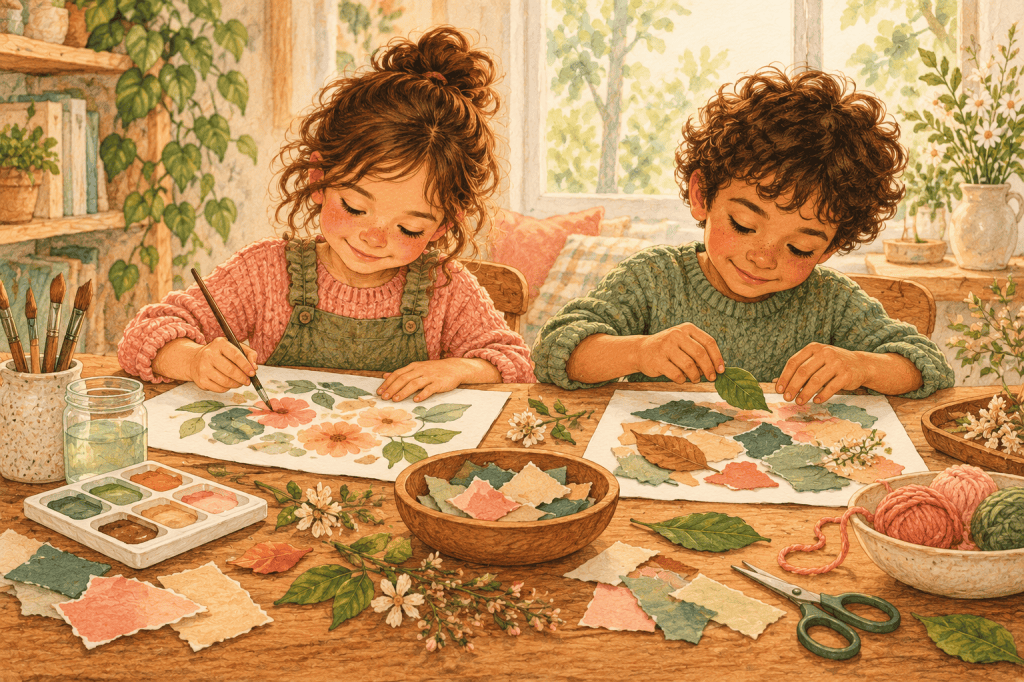
Children do not need an adult-designed masterpiece waiting at the end of every art activity. They need materials they can explore, enough structure to begin, and room to make decisions that belong to them.
By Paige Turner
Open-ended creative work can look messier and less predictable than a step-by-step craft, but that is exactly where much of the thinking happens. Children plan, experiment, change direction, solve material problems, tolerate imperfection, and decide when something feels complete.
Set out an invitation, not an example to copy
A finished adult model can quietly become the answer key. Instead, offer a simple prompt: “What could you make with these shapes?” “Can you create something that moves?” or “How many ways can you use this cardboard?” If an example is necessary to explain a technique, demonstrate the technique on scrap paper rather than presenting a polished final product.
Use fewer materials at one time
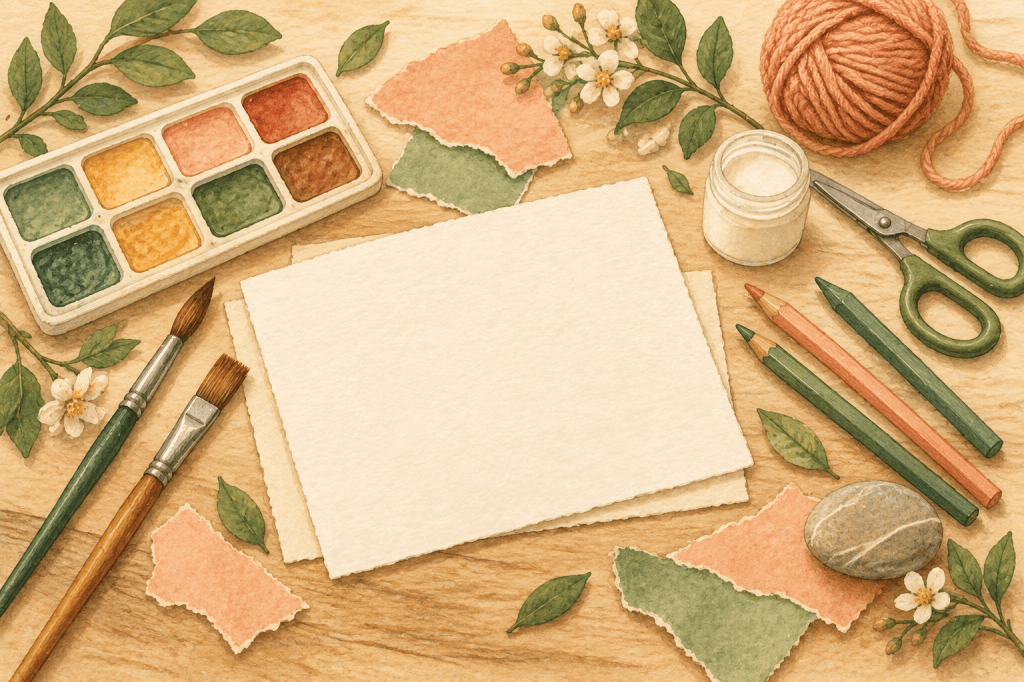
A table covered with every supply in the house can overwhelm children and create more cleanup than creativity. Choose a small combination with interesting possibilities: watercolor and black pencil, paper and yarn, clay and natural objects, or cardboard and tape. Add another material only when it extends an idea.
Try these low-prep invitations
- Paint the same object using three unexpected colors.
- Tear paper instead of cutting it and build a picture from the shapes.
- Create a tiny home for a toy using recycled boxes and fabric scraps.
- Press leaves, shells, or textured objects into clay.
- Draw a line, trade papers, and let someone else continue it.
- Build a standing sculpture from paper, tape, and cardboard.
- Make a color collection from objects found around the room.
Ask questions that protect ownership
Adults can support thinking without directing the result. Try “Tell me about this part,” “What are you trying to make happen?” or “What material might help?” Avoid guessing what the artwork is before the child explains it. A cheerful “Is that a dog?” can feel discouraging when the child was building a spaceship—or when the work was not meant to represent anything at all.
Let children meet manageable problems
Tape that will not hold, a tower that falls, or paint that mixes into an unexpected color can be frustrating. Pause before fixing it. Name the problem and offer access to tools: “That piece keeps leaning. What could make the base wider?” Productive struggle is part of creativity when the challenge remains emotionally manageable.
Make cleanup part of the design
Creativity is easier to welcome when it does not create an impossible ending. Use a washable mat or tray, keep a damp cloth nearby, place scraps in one bowl, and limit wet materials to an area the child can reach. Photograph three-dimensional work before recycling it when storage is limited.
Display process, not only polished products
Save sketches, early attempts, color experiments, and photos of works in progress. Ask the child what they want displayed and how. This communicates that thinking and revision matter—not just something that looks adult-approved.
When a child says, “I don’t know what to make”
Reduce the blank-page pressure. Offer a constraint: use only circles, build something that can balance, draw the view from under the table, or choose one object to transform. Constraints can spark ideas as long as they do not determine the answer.
Try one small step
Choose one idea that feels realistic, try it more than once, and watch what the child does with it. Useful learning experiences do not need to look impressive. They need enough time, safety, and flexibility for children to participate in their own way.
Sources & Further Reading
Find Pencil & Pebble
Etsy Store · Coming soon | Teachers Pay Teachers Store · Coming soon | YouTube · Coming soon | Instagram · Coming soon | Pinterest · Coming soon

