
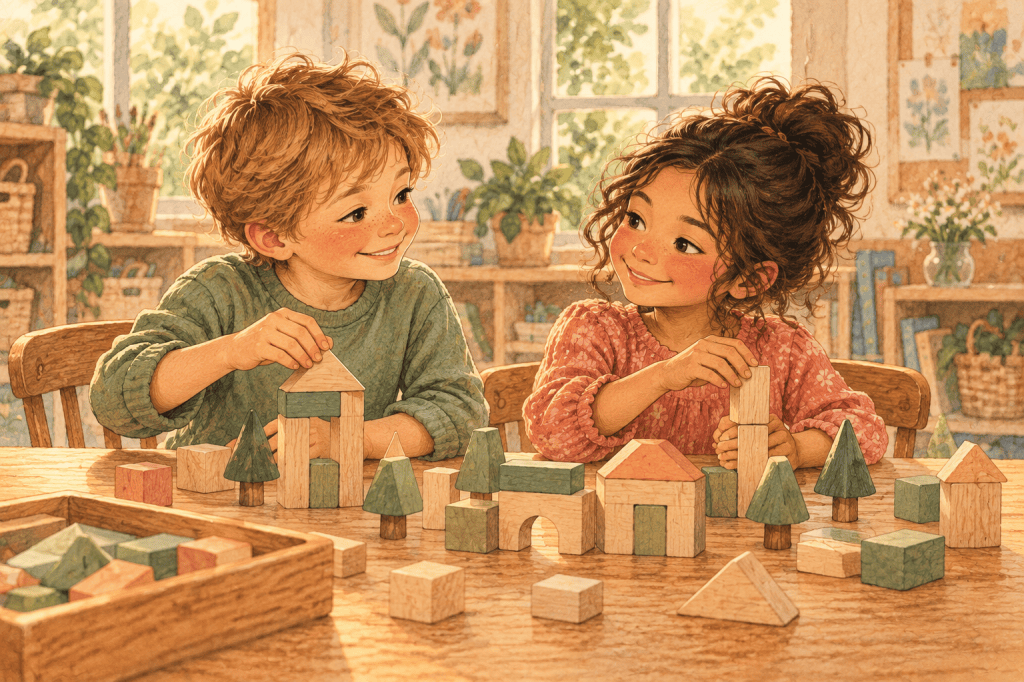
Friendship can look effortless from the outside, but it asks children to manage a complicated set of skills: reading cues, joining a group, sharing space, handling disappointment, solving disagreements, speaking up, listening, and trying again after a mistake.
By Paige Turner
These skills do not develop from one lecture about being nice. They grow through repeated experiences, clear language, adult modeling, and chances to practice when the stakes are low.
Teach specific actions instead of broad labels
“Be a good friend” is warm but vague. Translate it into visible actions: look toward the person speaking, leave room for another idea, ask before taking, notice when someone wants space, or check in after an accident. Specific language gives children something they can actually try.
Practice ways to join play
Joining an activity can be intimidating. Children may interrupt, grab materials, stand silently nearby, or ask a question so broad that other children ignore it. Practice a few usable approaches: watch first, comment on what is happening, offer a helpful role, or ask a specific question.
- “Can I build the road?”
- “I have an idea for the next part.”
- “Do you need another blue piece?”
- “Can I play after this round?”
Make turn-taking more flexible than a timer
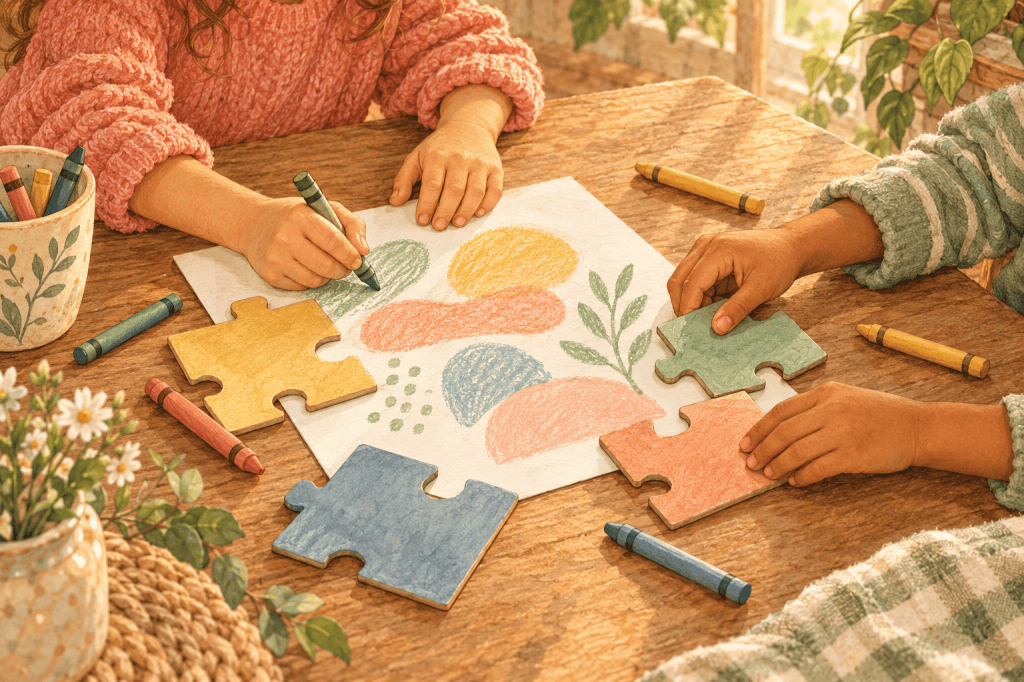
Turn-taking can mean alternating, using separate materials side by side, dividing roles, or working toward a shared goal. A timer is useful for scarce high-interest items, but collaboration often improves when children have more than one fair way to participate.
Coach disagreement without deciding everything
When conflict is safe enough for coaching, slow it down. Let each child explain what happened without requiring immediate agreement. Restate the problem neutrally: “You both want to choose what the building becomes.” Then help them generate options.
Adults do not have to declare a winner for every disagreement. Children can combine ideas, take turns choosing, divide the project, restart with new rules, or decide they need separate activities for now.
Teach repair, not forced apologies
A rushed “say sorry” may end the adult’s discomfort without repairing the relationship. Help children notice impact and choose an action: return the object, rebuild what was knocked down, check whether someone is hurt, give space, or explain what they will do differently.
- “I grabbed it before you were finished. I’m giving it back.”
- “I didn’t mean to knock it down. Can I help rebuild?”
- “That joke hurt you. I won’t use it again.”
- “I need space now, but I want to try again later.”
Notice healthy boundaries too
Friendship skills include saying no, leaving unkind play, asking an adult for help, and recognizing that someone may not want to play. Teach children that kindness does not require accepting repeated harm or surrendering every preference.
Use stories and pretend play
Books, dolls, figures, and role-play make social situations easier to examine from a small emotional distance. Pause before a character acts and ask what choices are available. Try two endings. Practice a sentence the child might use tomorrow.
Praise the skill you observed
Instead of only saying “good job,” name what worked: “You noticed he was still using that piece,” “You changed the game so everyone had a role,” or “You were upset and still used words.” Specific feedback helps children recognize the strategy they can repeat.
Try one small step
Choose one idea that feels realistic, try it more than once, and watch what the child does with it. Useful learning experiences do not need to look impressive. They need enough time, safety, and flexibility for children to participate in their own way.
Sources & Further Reading
Find Pencil & Pebble
Etsy Store · Coming soon | Teachers Pay Teachers Store · Coming soon | YouTube · Coming soon | Instagram · Coming soon | Pinterest · Coming soon

