
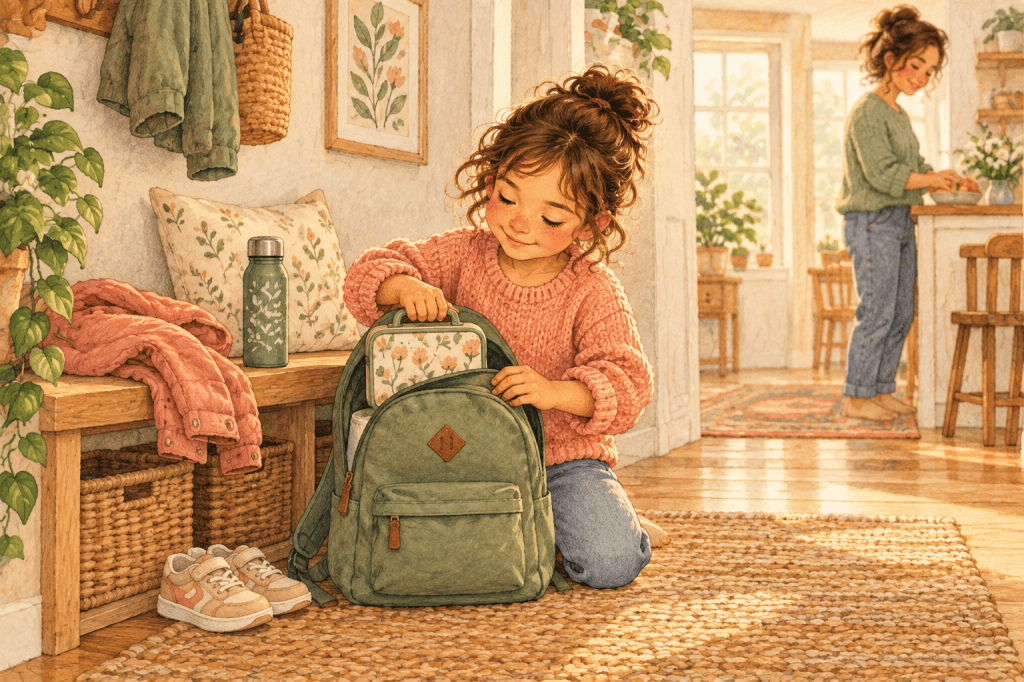
Independence is not a personality trait children either have or do not have. It is a collection of skills built through instruction, practice, access, and trust. A child may be independent with school materials but need support getting dressed, speaking up, preparing food, or beginning an unfamiliar task.
By Paige Turner
The most useful goal is not “do everything alone.” It is “do as much as you can, know what to try next, and know when to ask for help.” Healthy independence grows alongside connection.
Choose one complete routine
Adults often scatter responsibility across the day: “Get your shoes,” “Pack your bag,” “Clean that up,” “Find your paper.” Choose one routine and teach it from beginning to end. Packing a backpack, for example, includes checking what belongs inside, placing items in the correct pockets, closing it, and putting it by the door.
Prepare the environment for success
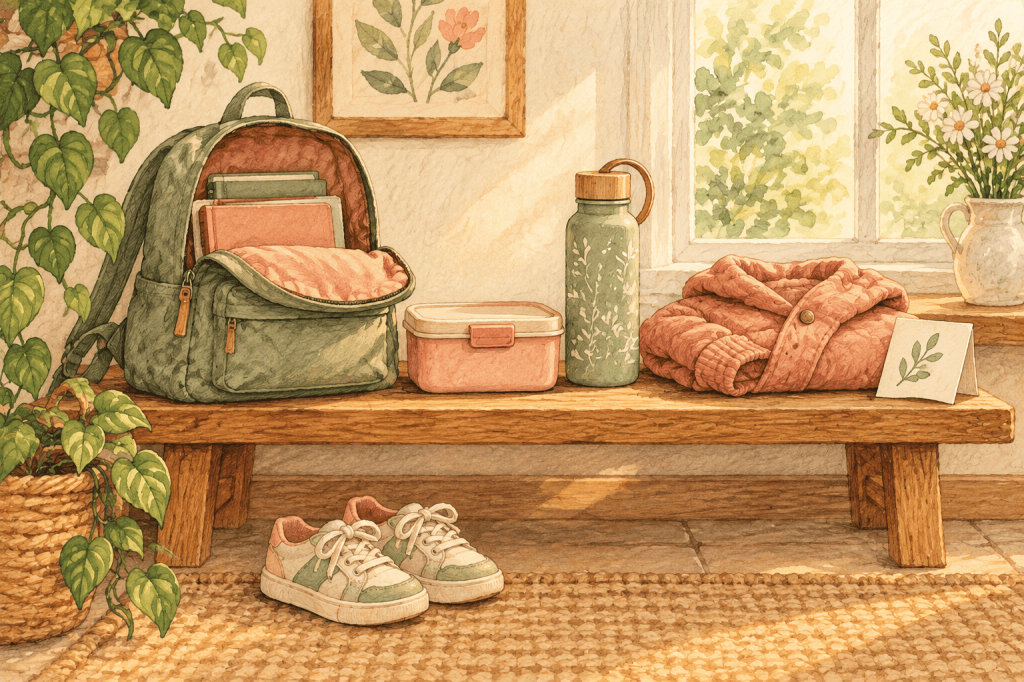
A child cannot independently reach supplies stored above their head or remember a routine whose materials move every day. Use low hooks, accessible bins, simple labels or pictures, lightweight containers, and consistent homes for frequently used items.
Environmental support is not cheating. Adults rely on calendars, shelves, signs, checklists, and designated storage too.
Teach, do together, then step back
Begin by modeling the routine while naming the important decisions. Next, complete it together. Then let the child lead while you remain available. Finally, move farther away and check only at the end. The amount of support can increase again when the routine changes or the child is tired.
Avoid correcting the method when the result works
Children may fold a towel differently, arrange a lunchbox in another order, or choose an outfit adults would not have chosen. If the outcome is safe and functional, allow ownership. Independence disappears when every attempt is micromanaged.
Use natural consequences carefully
A mild, safe outcome can teach: a forgotten library book cannot be returned that day, or a toy left outside must be cleaned. But adults should not withhold essential items, expose children to humiliation, or allow consequences beyond the child’s developmental capacity. Teaching remains the priority.
Offer meaningful choices
- Would you like to pack lunch before or after breakfast?
- Do you want the blue folder or green folder for this subject?
- Will you start with the quick task or the difficult task?
- Do you want me nearby or to check when you are finished?
Teach help-seeking as an independence skill
Independent children still need assistance. Practice specific language: “I tried this part and got stuck here,” “Can you show me the first step?” or “I need help opening this, then I can finish.” Asking effectively is more useful than waiting silently or abandoning the task.
Expect uneven progress
A child may manage a routine all week and need help on Friday. Illness, poor sleep, sensory overload, growth, stress, and unfamiliar environments affect performance. Temporary support does not erase learning. Return responsibility when the child is ready.
Independence ideas by everyday routine
- Pack a backpack using a picture checklist.
- Prepare a simple snack from accessible foods.
- Choose clothes based on weather choices provided.
- Refill a water bottle and place it by the door.
- Sort clean laundry into family baskets.
- Set up materials before homework or art.
- Order politely at a familiar restaurant with support nearby.
Measure growth by reduced support
Progress may look like moving from full physical help to verbal cues, from several reminders to one checklist, or from adult setup to independent preparation. Celebrate the fading support—not perfection.
Start smaller than you think
Choose one part of the routine to make clearer this week. Keep the language simple, make the next action visible, and give the child time to practice before adding more responsibility. Sustainable independence is built through many manageable repetitions.
Sources & Further Reading
Find Pencil & Pebble
Etsy Store · Coming soon | Teachers Pay Teachers Store · Coming soon | YouTube · Coming soon | Instagram · Coming soon | Pinterest · Coming soon

